A good collaboration within a group requires that you openly discuss your expectations and establish shared guidelines for how you will work together. This way, you know what the other members expect from your participation in the group, and you know what you can expect from them. It strengthens both the academic benefits and the overall well-being of the group.
However, collaboration is not always easy. A good working relationship must be established, maintained, and, if necessary, brought back on track when things have gone a bit off course. It therefore requires some effort, because collaboration is also a skill that needs to be learned. Use the tools and approaches that work best for your group, and remember that it is never too late to adjust the way you work together.
Whether you have a permanent group that meets weekly throughout the semester, or you simply need to solve an assignment before the next class, you can strengthen your collaboration by thinking of your group as a team.
Teaming means working together as a team to achieve results and help each other perform at your best. Teaming is about creating a collaborative environment in which everyone participates actively, learns from one another, and takes responsibility for ensuring that the group functions effectively.
Principles of a good team | |
|---|---|
| Agree on ground rules from the start: Talk about how you want to collaborate, for example how you will divide tasks, give each other feedback, and make decisions. If you will be working together over a longer period, consider creating a collaboration agreement. |
| Create a safe space: Make it clear that it is okay to ask questions, share ideas, and say when something is unclear. Be open about what you find difficult. This makes it easier to help one another and learn together. |
| Evaluate the group effort: Devote five minutes during a group meeting to discussing what is workingh well and what you would do differently next time, either in this group or in future groups |
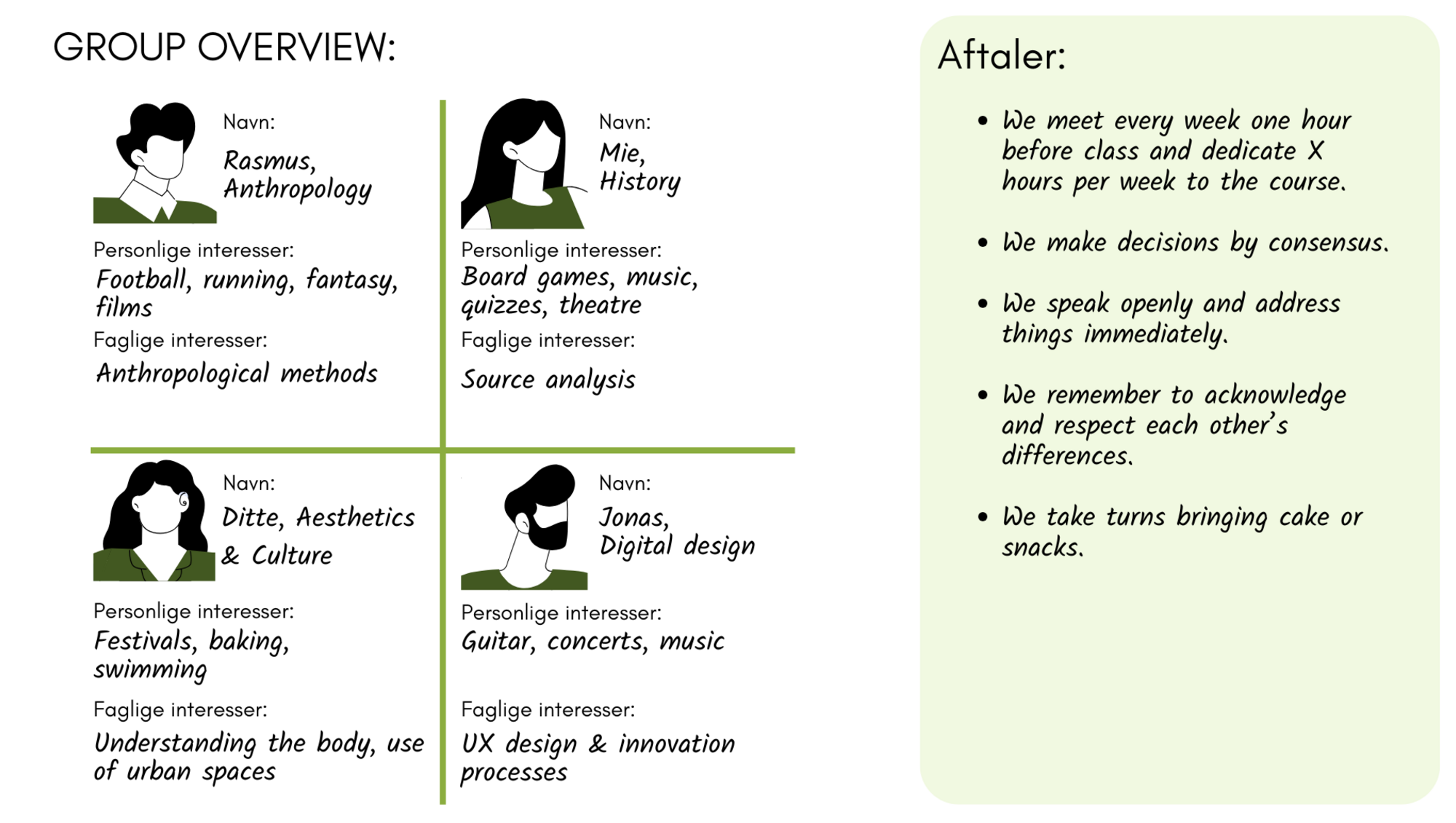
The first meeting of a newly formed group is crucial. Have a conversation about your mutual expectations regarding the group work. Use the list below to discuss what you expect from each other within the group and how your collaboration should proceed. You may also want to write down the agreements you reach.
Groups function best when there is room for different ways of contributing. Some people take the lead, others keep an overview, analyze information, and so on. Being aware of each other's differences and strengths helps create balance and avoid misunderstandings withing the group.
Belbin's 9 Team Roles is a model for understanding and discussing how you collaborate. Most people typically have one or two preferred roles, but they can also take on other roles depending on the situation and needs of the group.
| Teamrolle | Typical strengths | Typical weaknesses |
Thinking roles | Idea generator
| Gifted, creative and full of ideas. Sees difficult problems from new perspectives. | May be weak in communication with others. Forgetful and not very practical. |
Analyzer
| Analytical, level-headed, and objective. Has sound judgement. Sees all the rational aspects of an issue. | Often perceived as very direct, critical and skeptical. Somewhat slow-moving and not particularly inspiring to others. | |
Specialist
| Contributes specialist knowledge and technical skills. Strong professional commitment and confidence. Highly focused on goals and tasks. | Tends to isolate themselves and show little interest in other people. Guards their area of expertise and contributes narrowly within it. | |
Action-oriented roles | Initiator
| Dynamic, energetic, and restless. Challenges others and creates momentum. Finds ways around obstacles. | May have a strong temper. Impatient, assertive, and stubborn. Can come across as provocative. |
Organizer
| Disciplined, reliable, and loyal. Effective during implementation phases. Realistic and practical. | Somewhat inflexible. Responds slowly to new opportunities and adapts slowly to change. | |
Completer
| Careful and conscientious. Looks for erros and omissions. Perfectionistic, persistent, and precise. | May worry unnecessarily. Can be overly meticulous and afraid of making mistakes. Reluctant to delegate. | |
Social roles | Networker
| Outgoing, enthusiastic, curious, and communicative. Explores opportunities and builds connections. | Easily distracted. Often loses interest once the initial enthusiam fades. Talks a lot. |
Coordinator
| Mature, self-confident, and trustworthy. Able to prioritize. Clarifies goals and facilitates decision-making. Recognizes others' talents. | May have a tendency to manipulate or build personal influence. Not necessarily the most knowledgeable member of the team. | |
Facilitator
| Socially oriented, outgoing, and highly observant. Sensitive, diplomatic, and flexible. Good listener. Avoids friction and creates a positive atmosphere. | May be indecisive and lack confidence in critical situations. Can be overly sensitive. |
The above table has been developed based on https://potential.dk/
| Here are examples of rituals and habits used by other groups: |
|
A useful teaming exercise is to do a check-in and check-out, where you both begin and end you group work by asking each other a set of regular questions. For example:
Check-in and -out questions: | |
|---|---|
| Check-in Questions:
|
| Check out spørgsmål:
|

There are a number of free digital services that your group can benefit from. Below is a selection of services: